
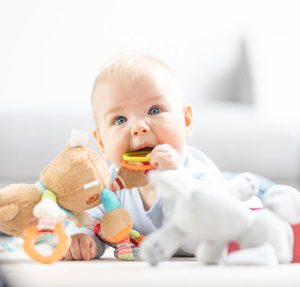
Have you ever watched your baby squeeze a crinkly toy and wondered what they might be thinking? Every touch and sound sends signals that help your little one make sense of the world. Many parents want easy ways to support that growth, and quality infant care in Denver includes hands-on learning to do just that.
Before you try anything at home, it helps to know what this kind of play looks like. In this guide, 1080 Learning Center explains more.
What Sensory Play Looks Like for Infants
Sensory play, such as looking in a baby-safe mirror or listening to a gentle song, gives your baby chances to use one or more senses.
Early sensory exploration doesn’t require special equipment or a strict plan. Effective sensory play for infants follows your baby’s lead and lets curiosity set the pace. Even five minutes at a time can make a difference.
How Sensory Play Builds Neural Connections
Sensory play strengthens the pathways in a growing baby’s brain, which forms more than 1 million neural connections every second.
Each new texture or sound activates those pathways, and repetition strengthens them. That practice lays the groundwork for robust cognitive development, including memory and problem-solving skills that will serve them well as they grow older. It also sharpens sensory processing skills, helping your baby sort and respond to what the body senses.
Skills Your Baby Gains Through Play
Many everyday abilities begin with simple, hands-on moments. When you offer sensory activities, you give your baby the opportunity to practice and hone important life skills.
Hand Strength and Coordination
Grasping a soft block or squishing a cloth book strengthens tiny hand muscles. Those moments build fine motor skills that later help with holding a spoon and, eventually, a pencil.
Early Words and Communication
Describing what your baby touches, such as “soft” or “bumpy,” adds new words to the day. This steady exposure supports language development long before your baby says their first words.
Emotional Benefits Beyond Brain Growth
Sensory play does more than build skills. Slow, gentle activities can calm a fussy baby and make bedtime routines easier.
Shared play also strengthens your bond with your baby. When you smile and talk during activities, your little one learns that the world feels safe and responsive. Over time, that sense of security makes new experiences less stressful.
Easy Sensory Play Ideas for Home
These easy ideas work with items you already have:
- Texture basket: Fill a shallow basket with safe household items of varied textures, then let your baby touch each one at a time.
- Water play: Let your baby splash in a small amount of warm water while keeping one hand on them at all times.
- Sensory bottle: Glue the lid on a clear bottle filled with water and sparkles, then place it near your baby during tummy time.
- Music moment: Sing softly and tap a wooden spoon on a pot so your baby can hear different rhythms.
Repeat familiar favorites while introducing one new option each week. This balance keeps playtime comfortable and varied.
Matching Activities to Your Baby’s Stage
Every baby grows at a different pace, so flexible expectations help. Many parents check baby developmental milestones to see which skills may come next. Newborns often enjoy high-contrast cards and gentle voices, while older babies prefer rattles and soft books.
Watching how your baby reacts to each activity tells you far more than any chart can. If you ever feel unsure about your baby’s progress, talk with your pediatrician for guidance.
Safety Tips for Sensory Play
Keep these safety basics in mind:
- Supervision: Stay close during every session and keep your eyes on your baby.
- Object size: Choose items too large to fit inside a toilet paper tube.
- Cleanliness: Wash toys often because babies put nearly everything in their mouths.
- Baby’s cues: Pause when your baby turns away or fusses, since those signals can mean overstimulation.
With these habits in place, playtime stays enjoyable for both of you.
Grow Little Minds With 1080 Learning Center
Playtime that engages the senses gives your baby’s brain the practice it needs to grow strong and flexible. At our center, hands-on exploration supports infant development, while our preschool and Pre-K classrooms provide the benefits of early Spanish immersion.
Our home-like infant rooms offer low caregiver-to-infant ratios and a sensory-rich setting built to support healthy development. Call 1080 Learning Center at (303) 892-6233 today to learn how we incorporate sensory play into infant care in Denver.